UNPRECEDENTED
LJMU DEGREE SHOW
Liverpool School of Art and Design
ABOUT THE WORK: PART ONE
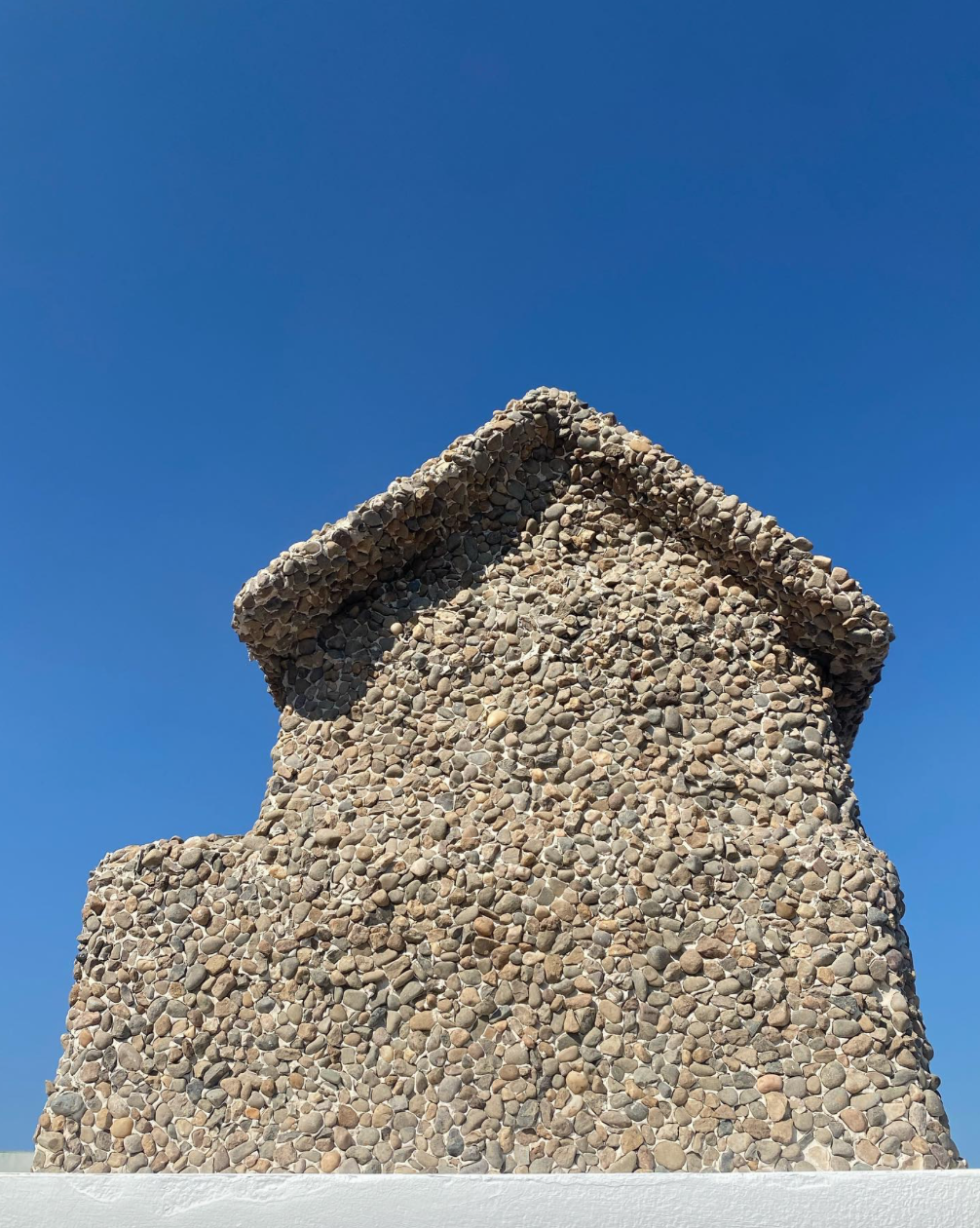
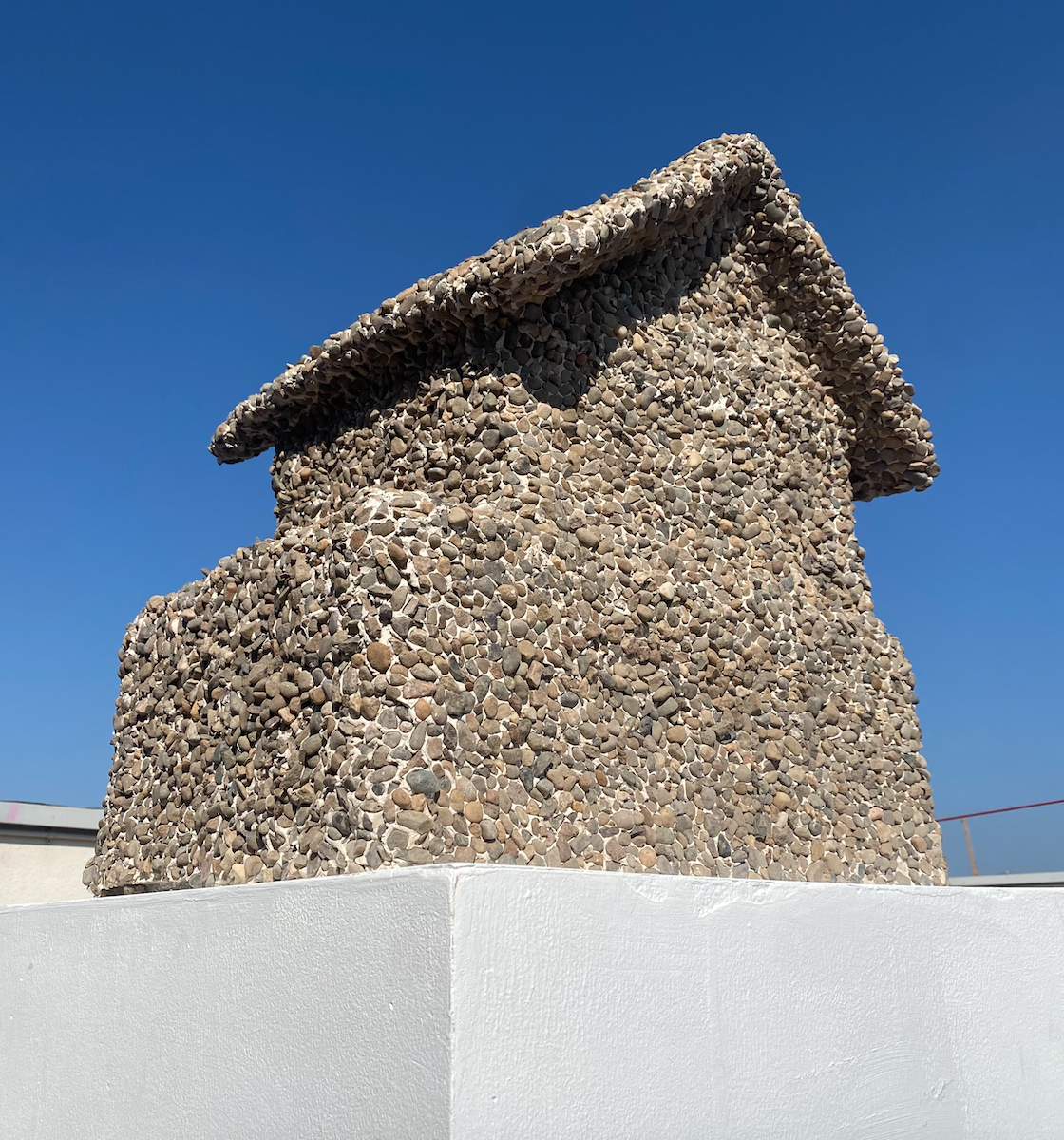
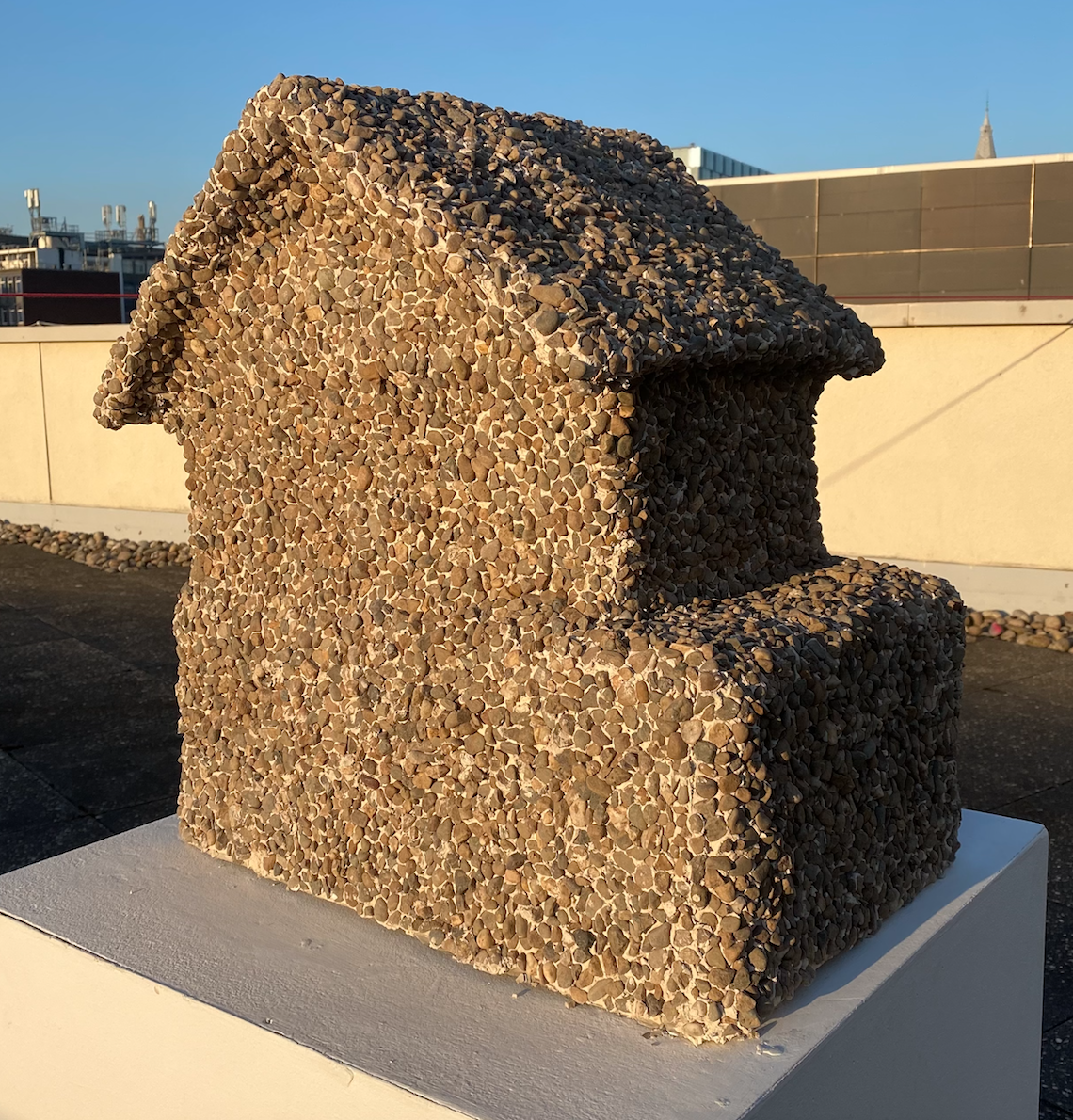
LOCKED INSIDE (2023)
Using materials synonymous with building sites, this sculpture is an exploration of both memory and architecture in the form of a pebble-dashed house-shaped form. Pebbledash is a controversial rendering popularly used in British landscape and associated in the UK with the very worst excesses of the home improvement industry. It’s used to cover both bad brickwork and historic details; its use signifying the fallible responses to the urgent needs of working-class structures.
The idea for the sculpture is partially inspired by the house of my grandparents. This house contains the past memories of my dad, myself and our family. It is where we gathered for almost every family event, it is where my grandad felt safe as his Alzheimers took away the memories he had formed there, where my nana died, and where her ashes laid to rest. It is a space occupied by memory and informed by the beings living and loving inside. The absence of all of the details that remind us this space was a home such as its door and windows question the relationship of space and memory and harks back to works such as Rachel Whiteread's project 'Ghost'. Without the details of the house it is based on, the sculpture becomes something else entirely, raising questions about my desire to keep hold of these memories and lock them inside so that they cannot escape. Using the pebbledash, I obscure the personal details specific to this home. The labouring process of attaching each pebble by hand and the use of standard-grade building materials further inflates the working-class routes this work holds.
This sculpture was presented alongside ‘ROOTS,’ my main installation for the Degree Show. When considering the inclusion of this piece in my degree show installation, the work had its context changed into something more apocalyptic. Standing alone amongst the partially destroyed balcony it further pushes the boundaries of absurd environments!
ABOUT THE SHOW
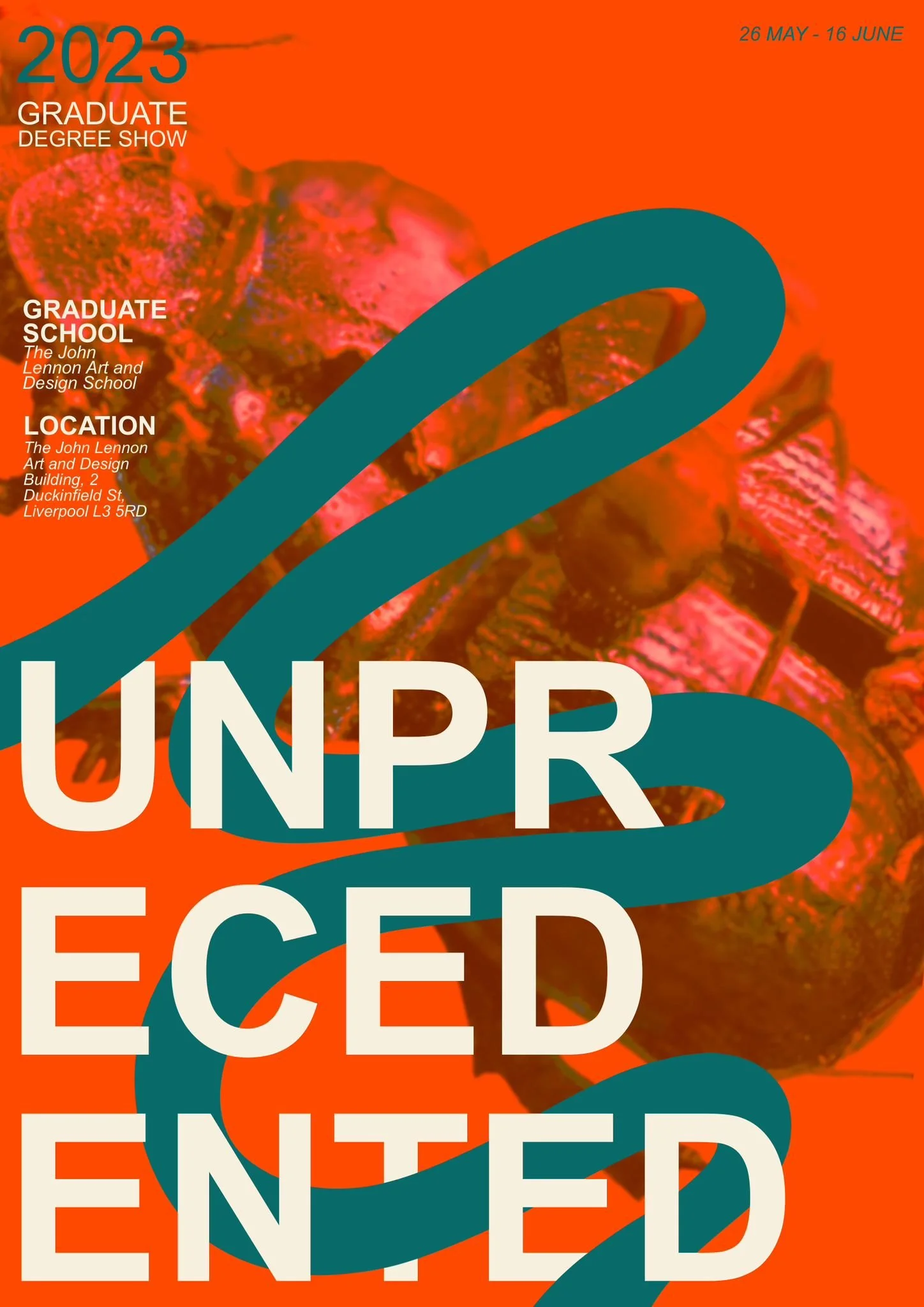
“Uncprecedented (2023) celebrates the 2023 BA Undergraduates of Fine Art, and marked LJMU’s bicentenary year. While every degree show is an exhibition like no other, reflecting the metaphorical and metamorphic development of each individual student, it’s fair to say our cohort’s experience has been unique. In face - as so often stated by the world’s media - it had been unprecedented. The COVID 19 pandemic affected us and our contemporaries from the outset. It took away our first-hand experience of studios, workshops and communal acts of making, and fundamentally altered the art school experience. We end our degree in another unprecedented moment, with the strike action by academics and staff that hit 150 UK universities earlier this year, and now the marking and assessment boycott, both undertaken in response to poor working conditions. We stand in solidarity with our teachers and together with students across the country. This exhibition celebrates how we have learned to adapt and overcome, shaping and stretching our working environments to their fullest potentials, to progress, transform and realise our artistic practice and positions.”
The show contained work from 62 artists, and was curating by Dr Sarah Edith James.
ABOUT THE WORK:
PART TWO
ROOTS (2023)
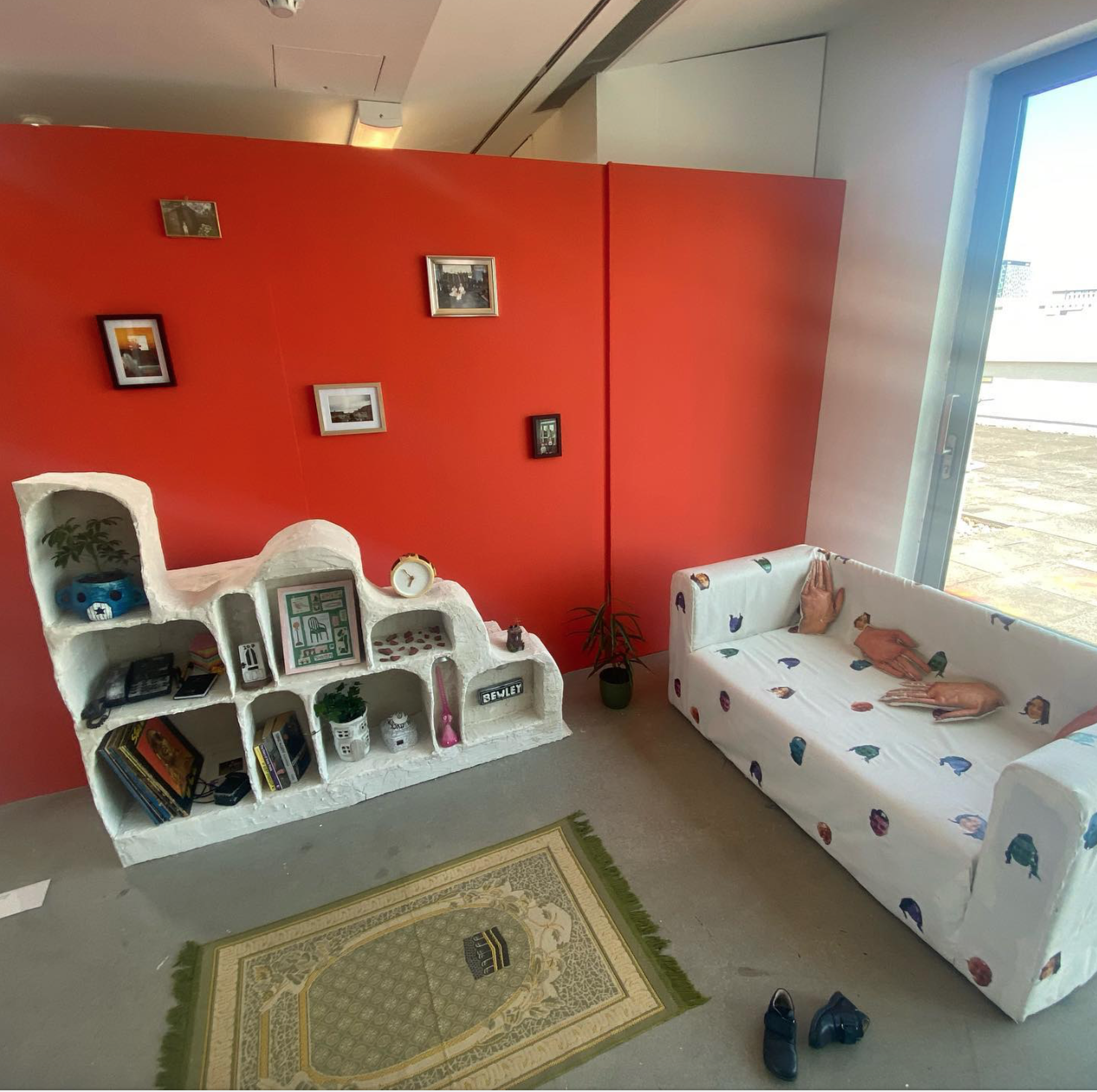
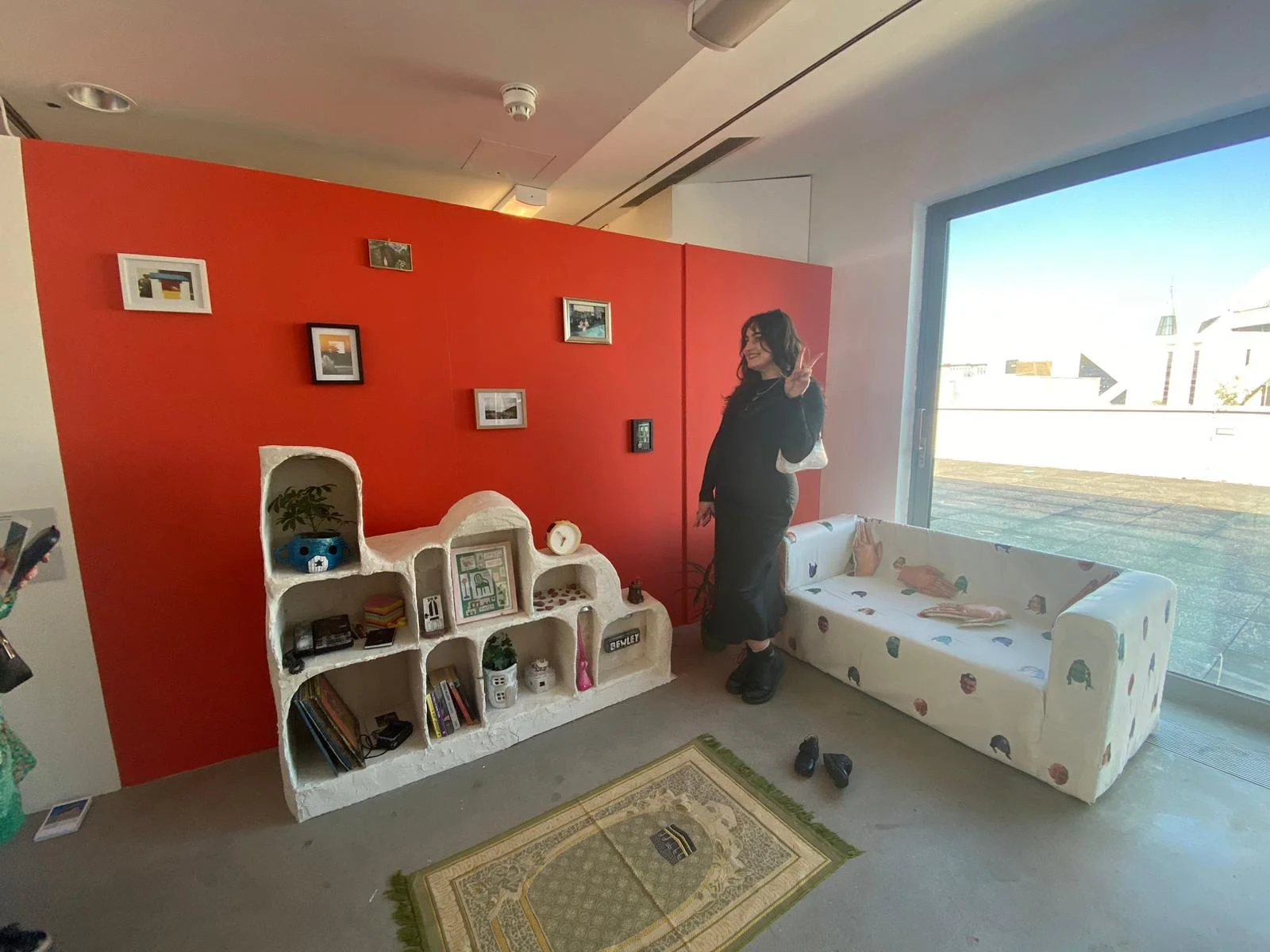
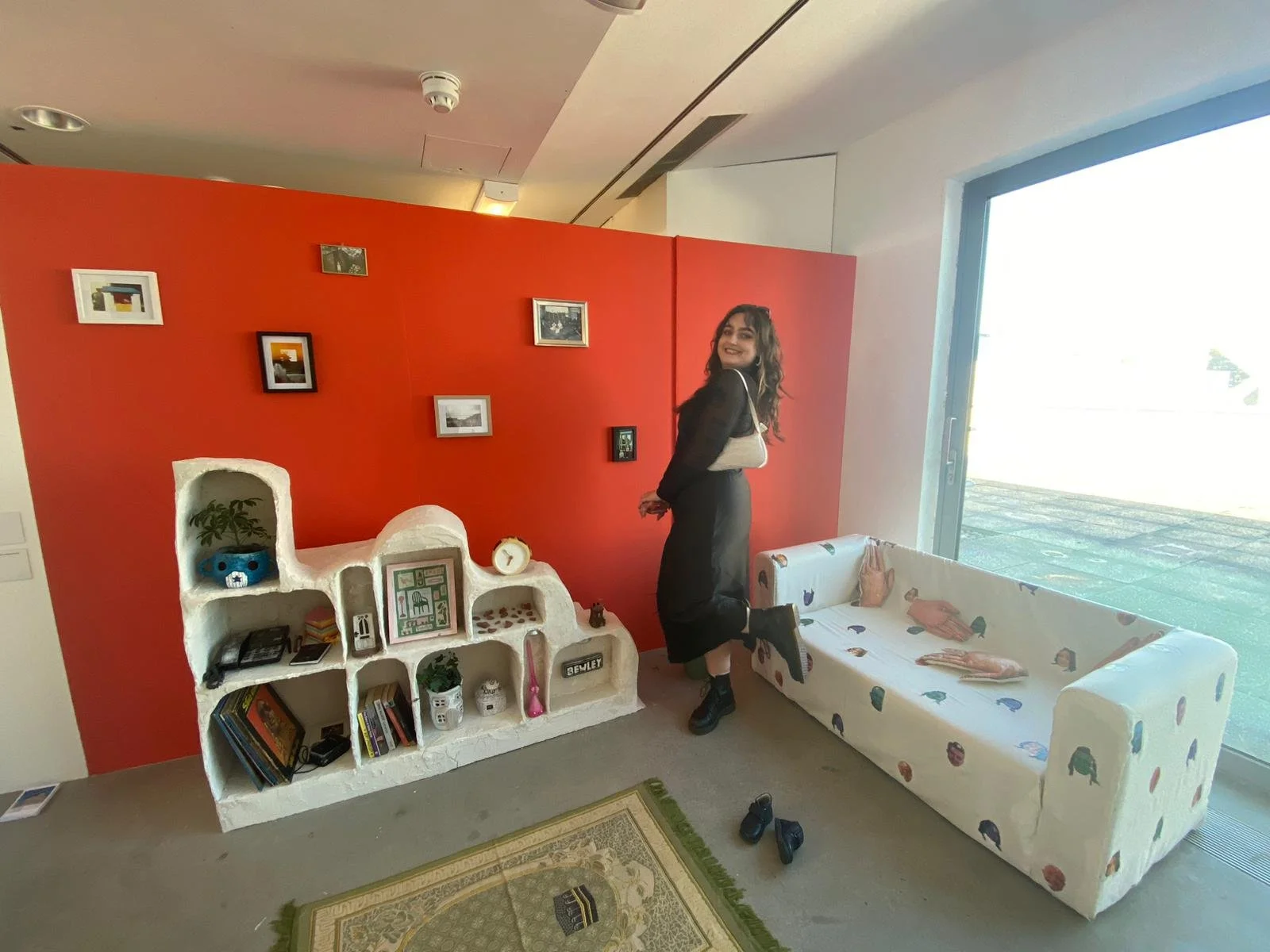
An autobiographical surrealist living room scene entitled, ‘ROOTS,’ presents décor and furniture which collects the entirety of my research throughout this year. The multidisciplinary sculpture-based installation challenges the functionality of object and space, explores the relationship between the body and sculpture, distorts the familiarity of dwellings and creates an environment that challenges the routine of a traditional gallery space by providing an area inside the work to reflect.
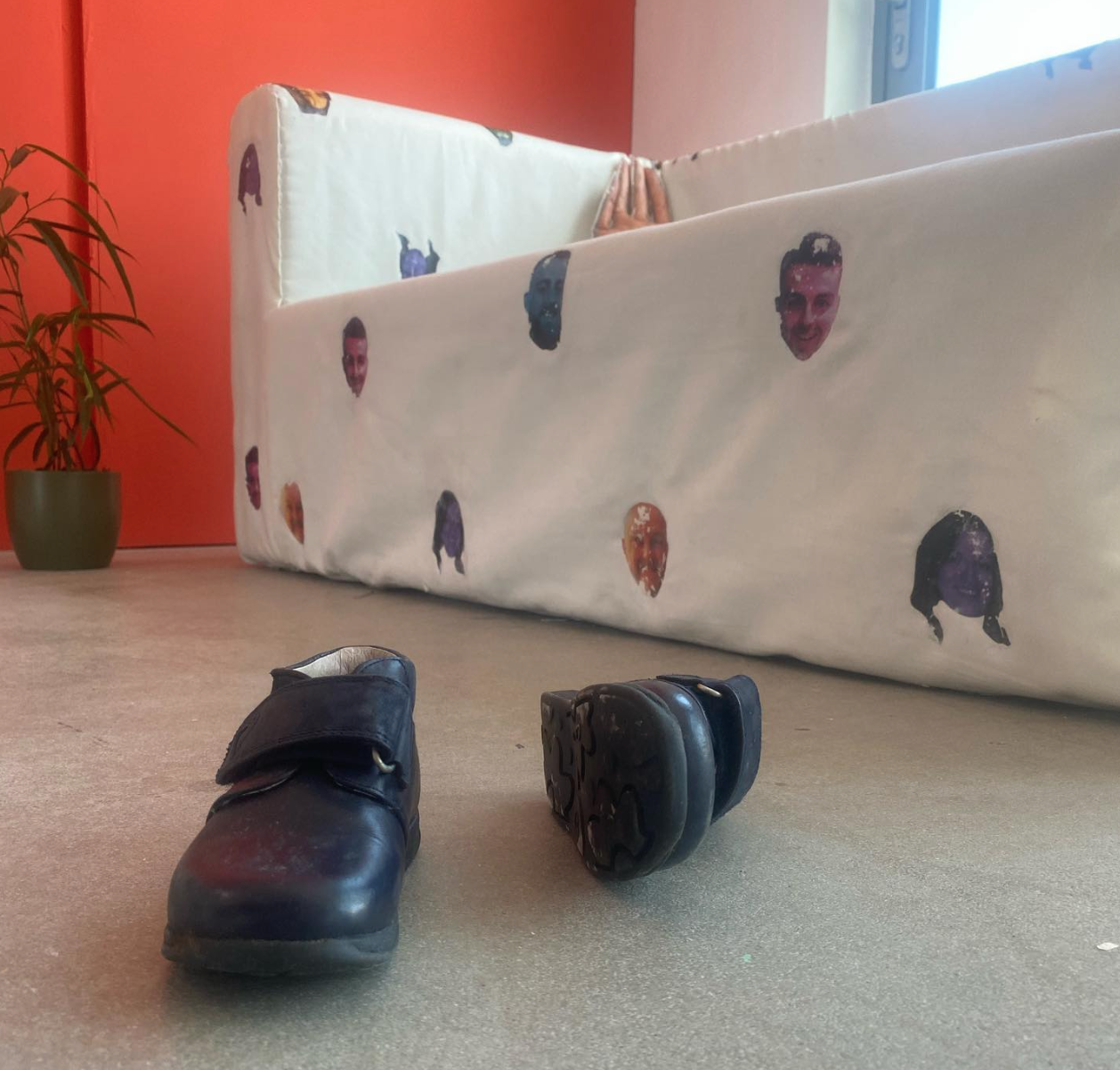
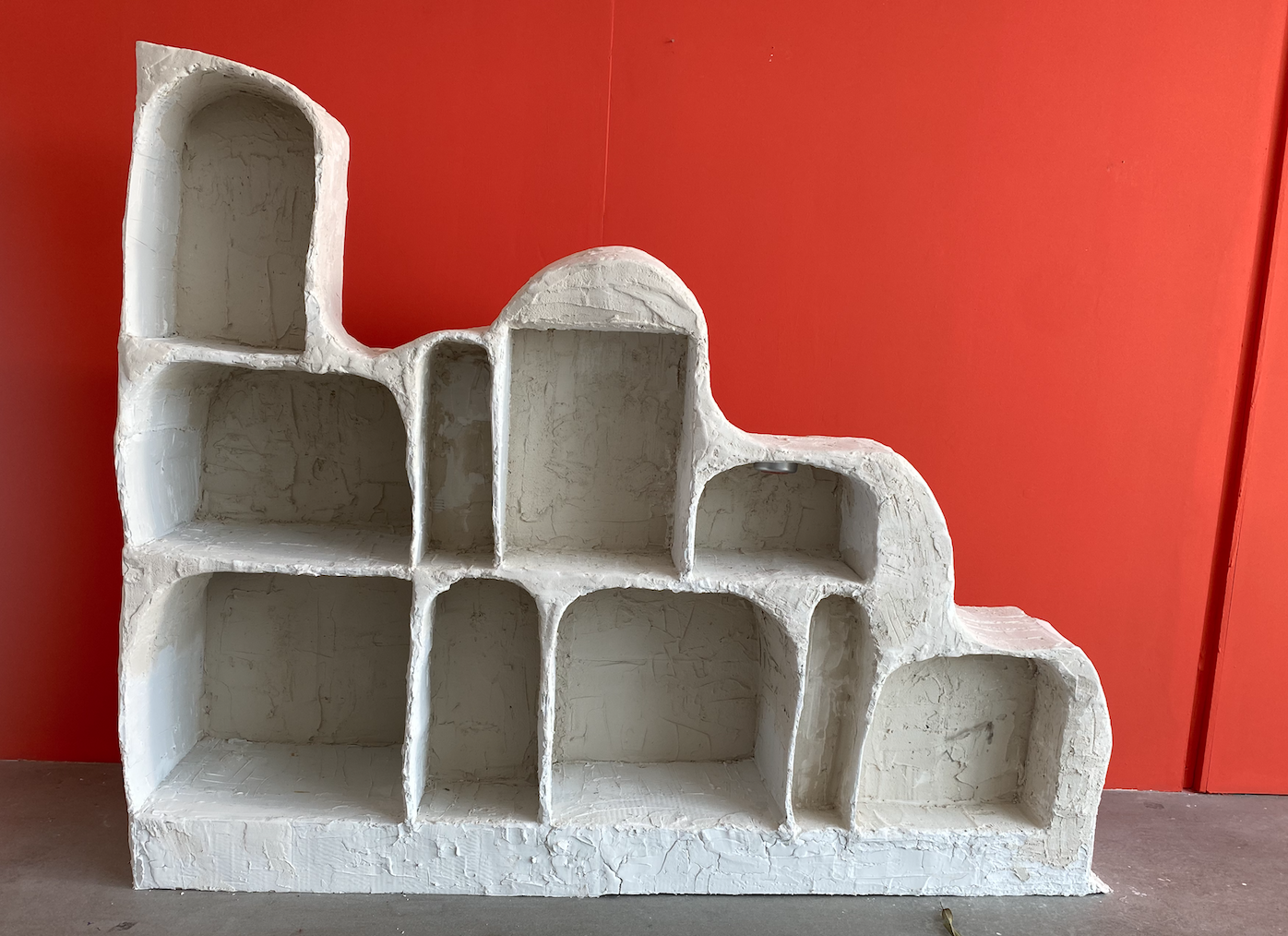
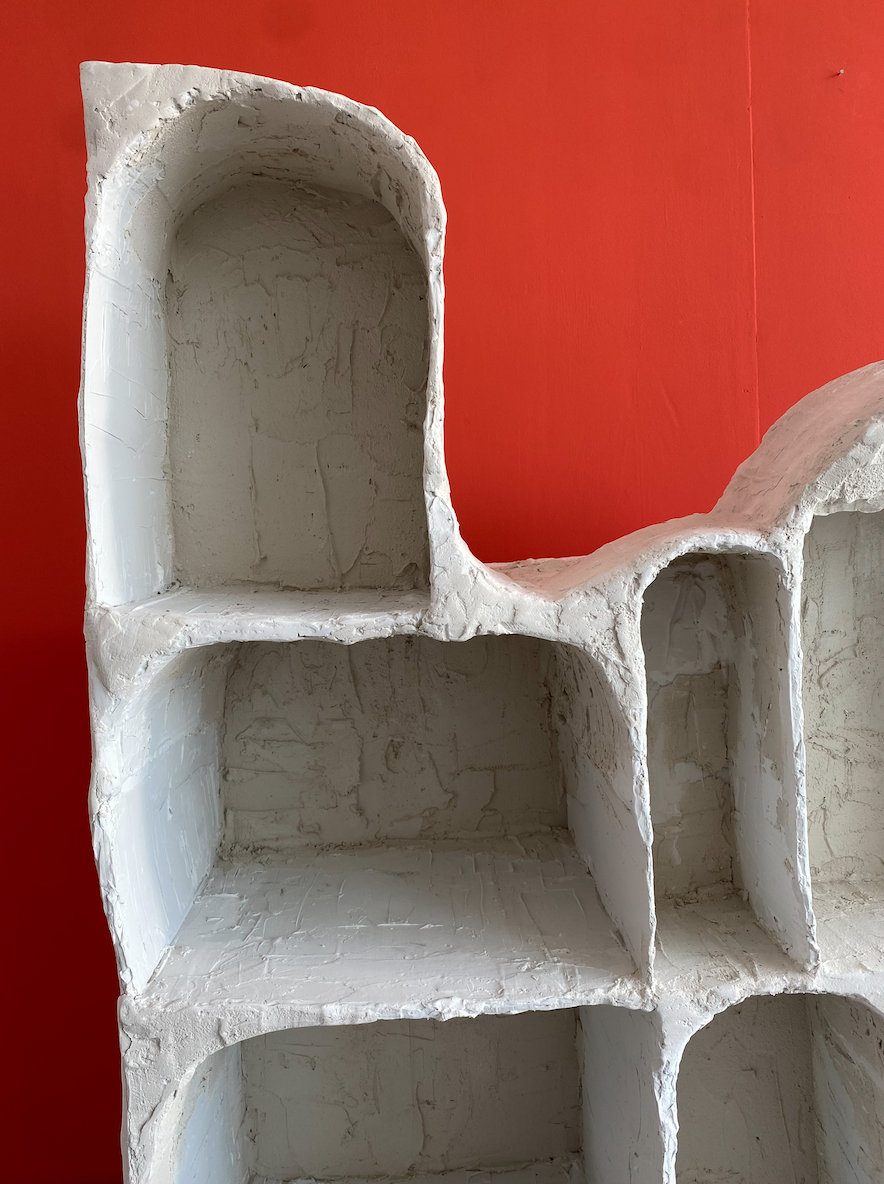
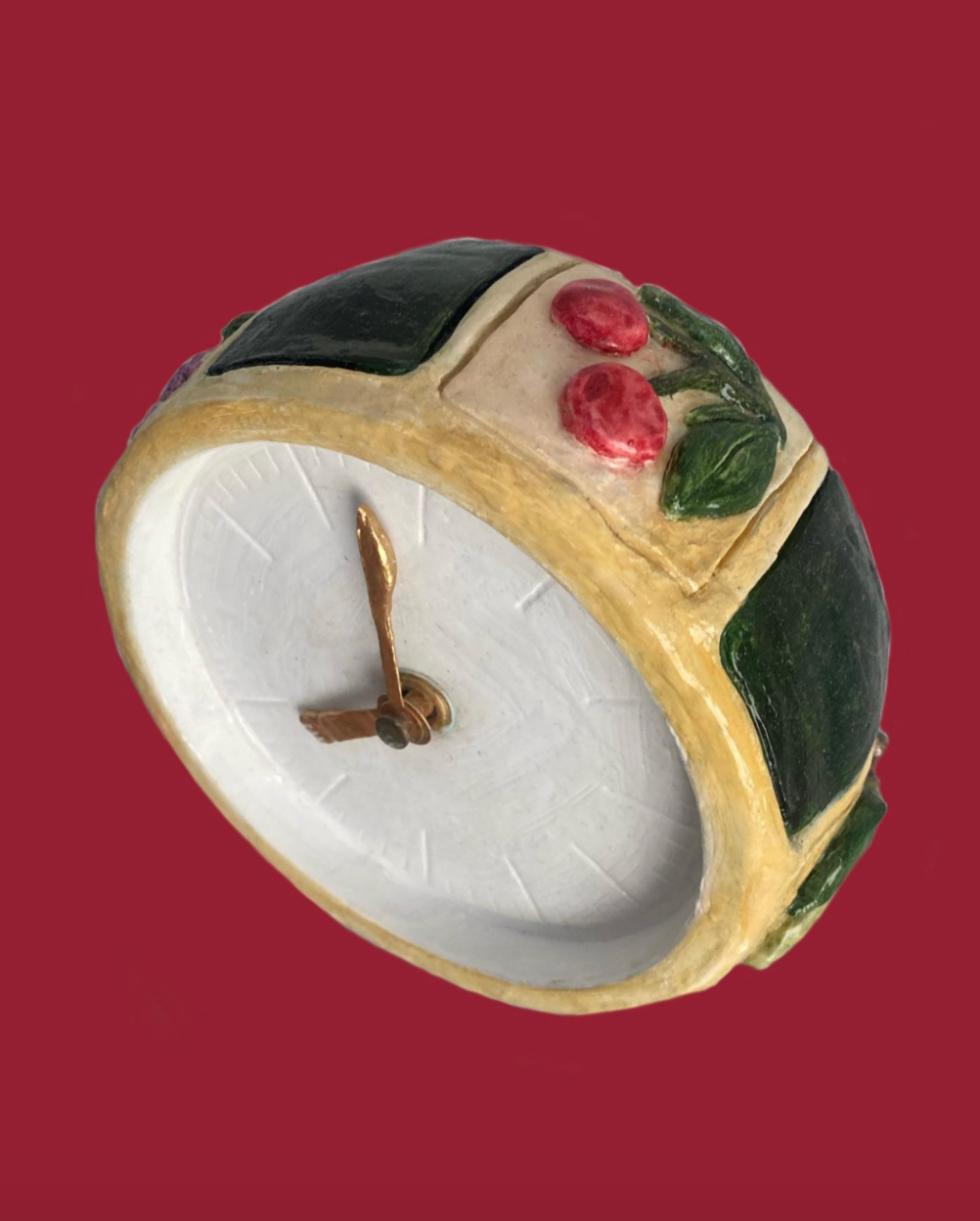
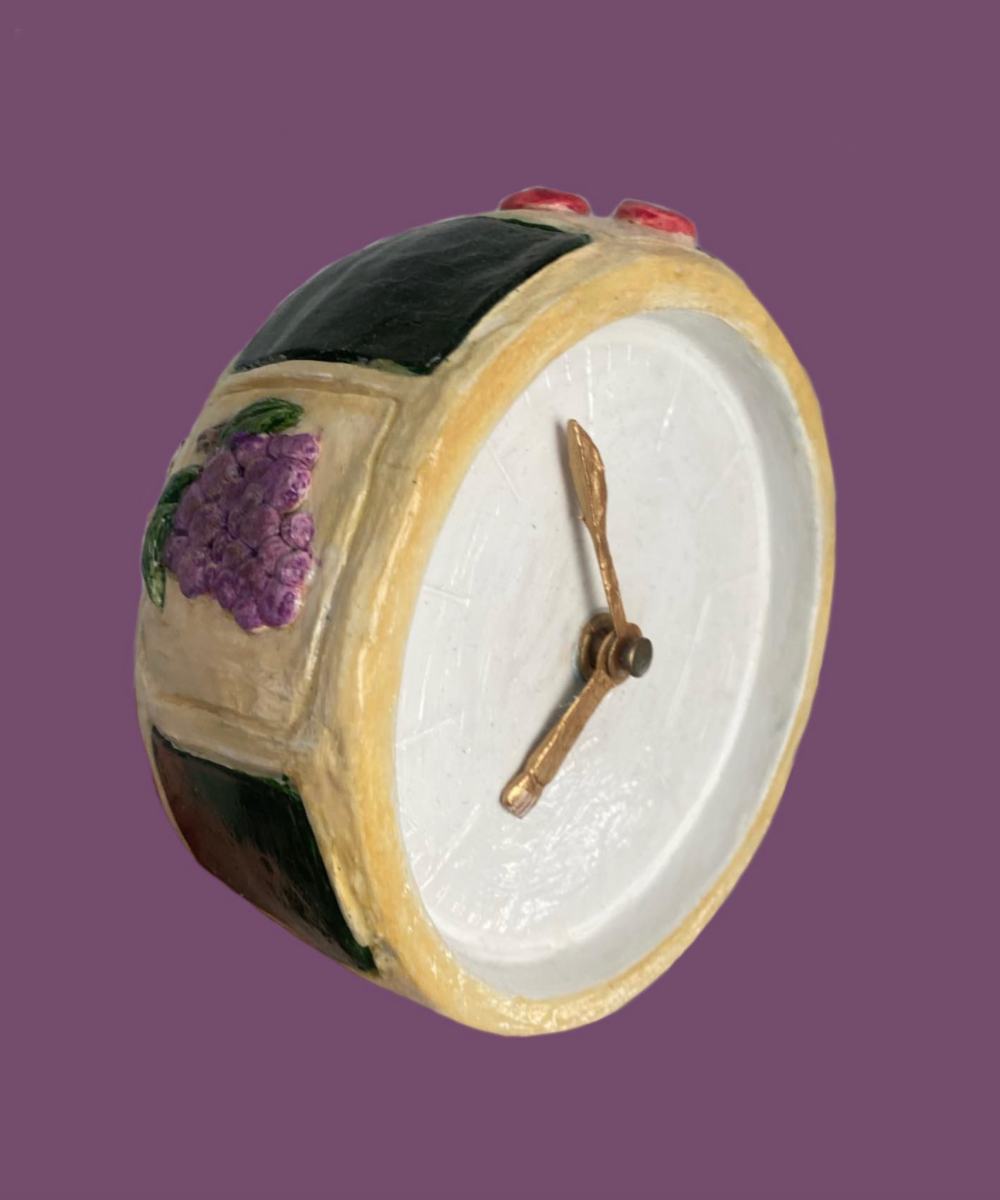
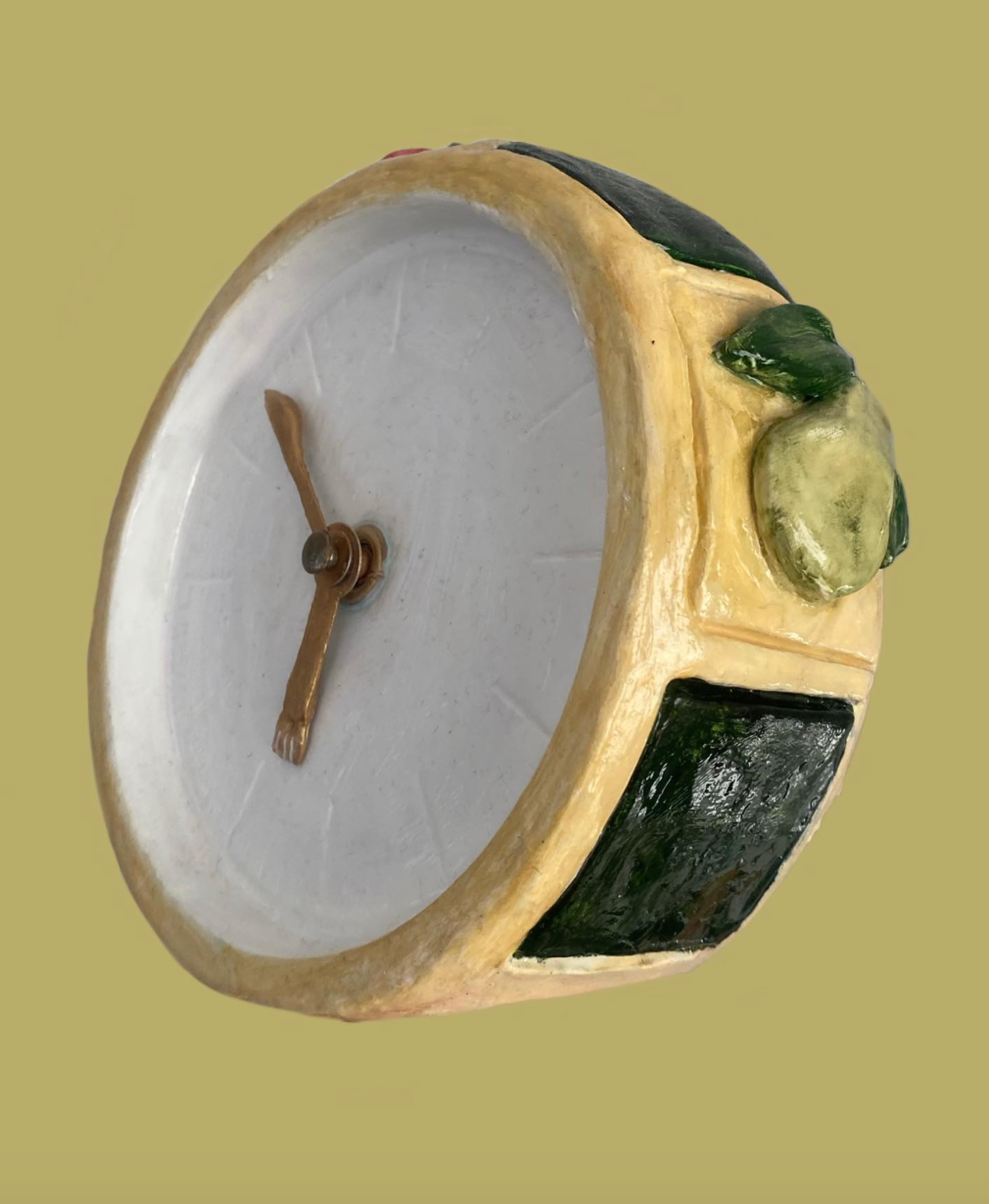
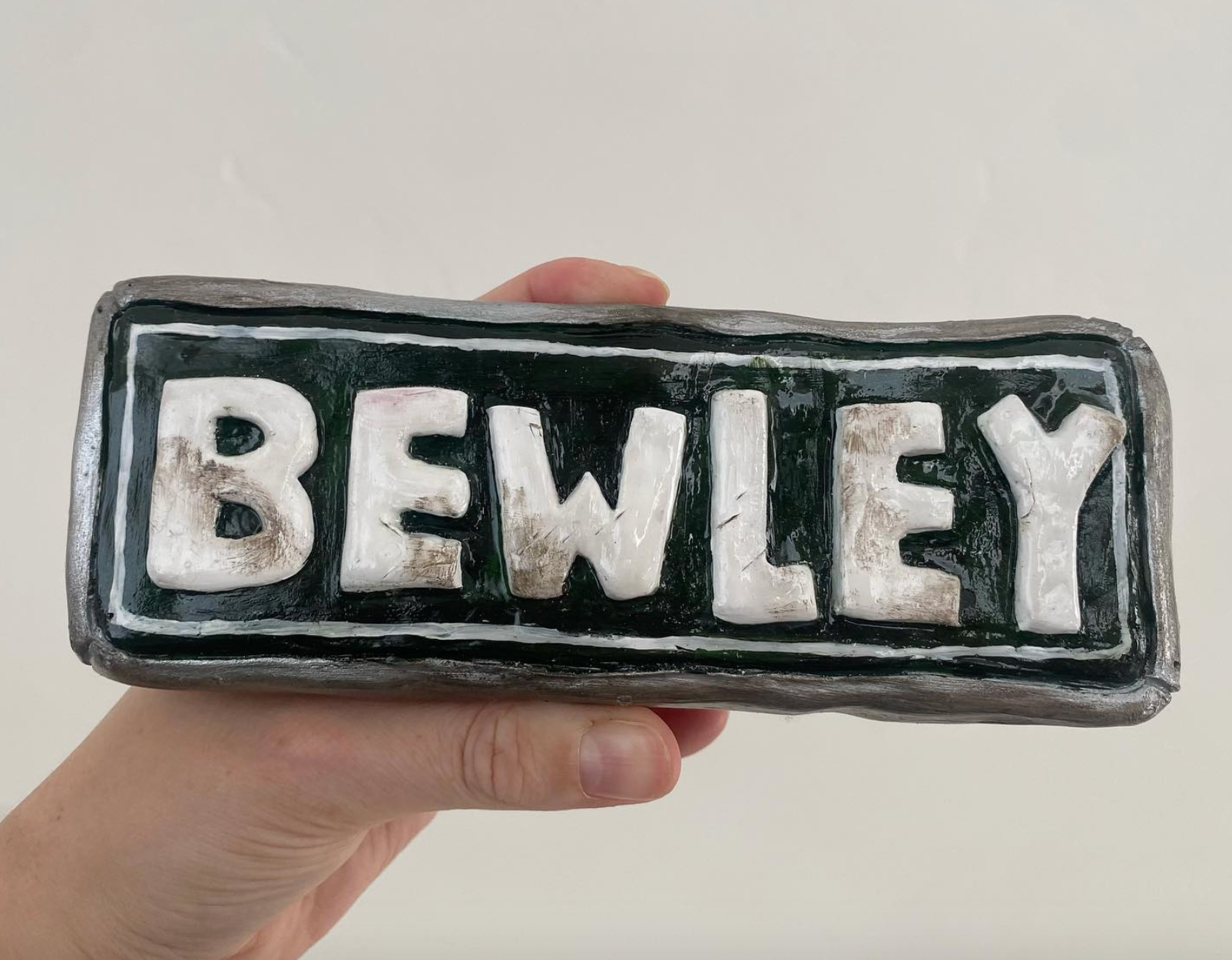
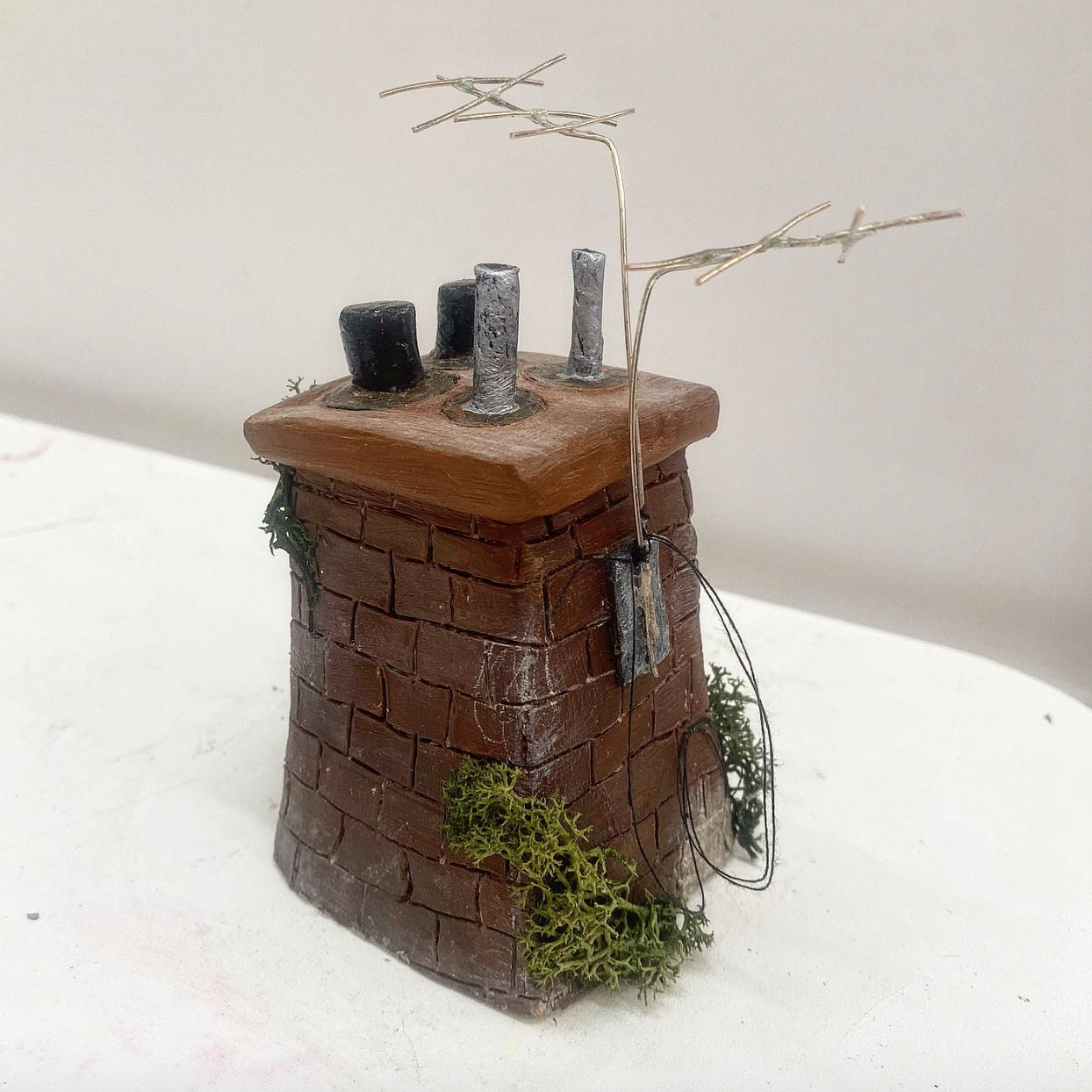
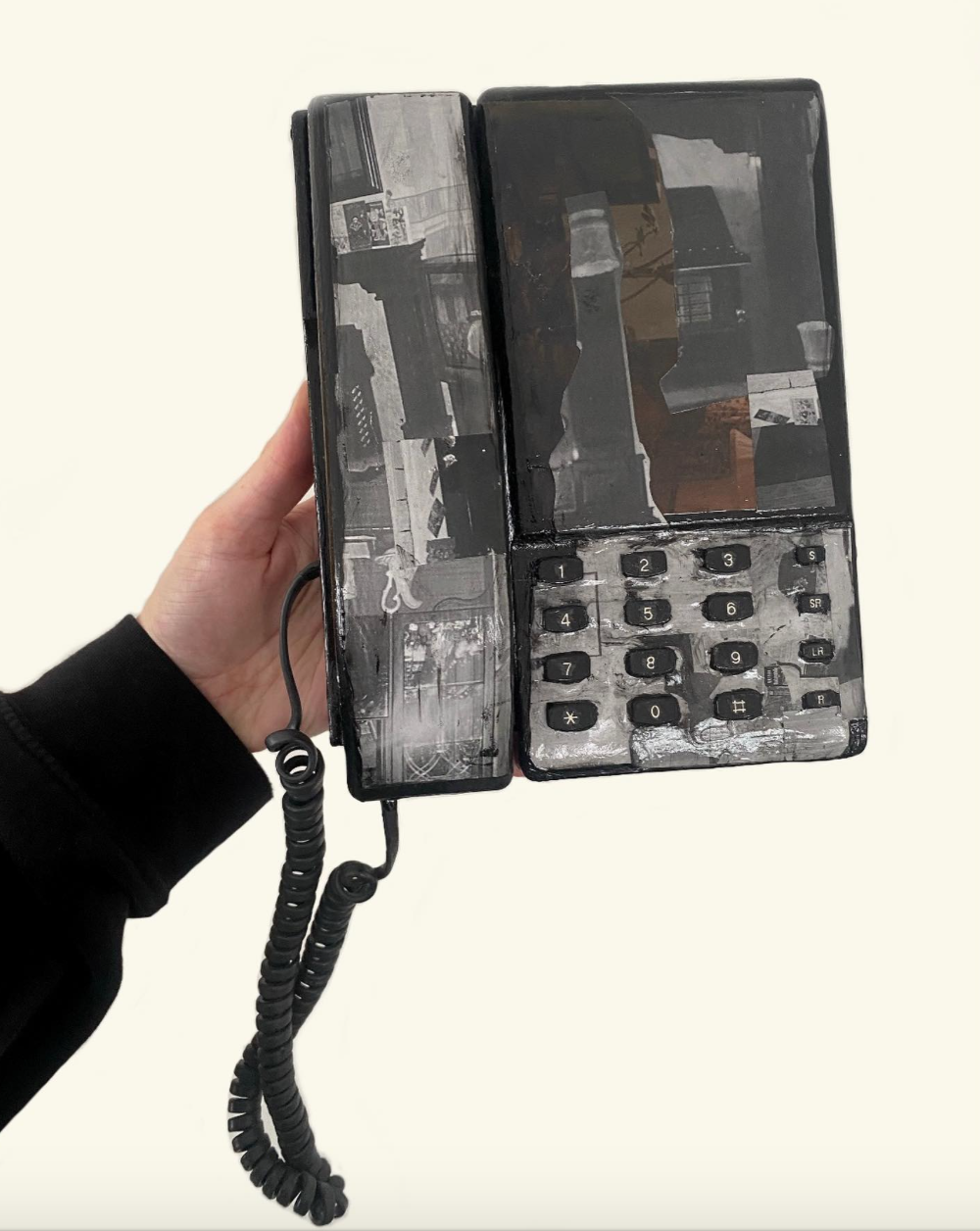
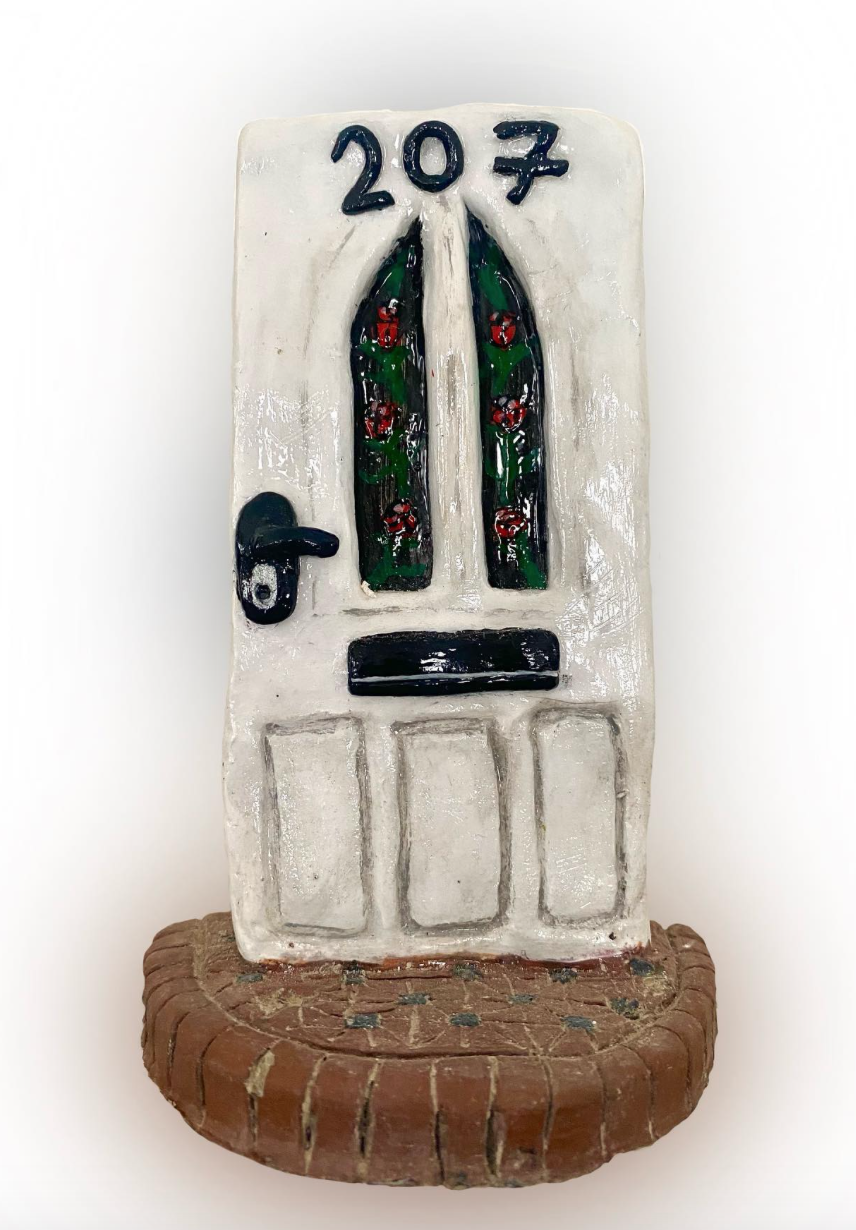
Blurring boarders between interior design and contemporary art, objects are visually imbued with links to childhood and family. An upholstered couch contains image transferred polka dot patterns of my families faces, and a hand-built unit contains purposefully chosen objects, each telling its own story; records and books passed through generations of family; bricks collected from the broken wall of my childhood home and sculptures inspired by its other architectural features; an early 2000’s phone layered in images of my living room during the 1980’s and 1990’s; my grandads camera; a kitchen tile inspired clock showcasing the time of which I was born, as well as plant pots in the shape of houses. Each object was made or intervened with meticulously to raise questions regarding the personification of objects, the attachment of memory to object and the presentation of individual or shared social, political and ethnic identity through object. Works such as ‘The Dream of Venus,’ by Salvador Dali, ‘Casablanca Cabinet,’ by Ettore Sottsass, ‘Home is Not A Place,’ by Johnny Pitts and ‘Escriptori arxivador de partitures,’ by Josep Maria Jujol, informed this final installation. Photographs displayed along the wall of the installation present my childhood home and the elements of interior design it has received over the last 40 years. The most introspective of these images is my-childhood-self alongside a Wendy house – the house motif a crucial element throughout all of my work. Even throughout the installation process, I continued to review captured moments from my past as a form of psychoanalysis.
From a curatorial sense, access to natural undisturbed light to better illuminate partially covered sculptures was essential. Coloured spotlights were also installed to slightly transform the natural light into something more surreal. The installation process was done with continued collaborative group critiques, as well as independent considerations such as placing the installation beside other artist’s pieces that did not clash which kept a consistent flow throughout the exhibition. The colour of the wall was chosen specifically to match the theme of the exhibition, its bright shade working well to break up the neutral colours used in my installation. A section of the wall was kept unpainted originally to accommodate another artist, but through continued collaborative effort during install, this space became free – the decision to keep this section white was an aesthetic choice as I was drawn to the graphic contrast in shade.
